This could be the biggest breakthrough in cooking and baking in recent years. Finally, health-conscious cooks worldwide have a worthwhile substitute for eggs, and chances are, it’s sitting in your kitchen cabinet right now. It’s called aquafaba.

What is Aquafaba?
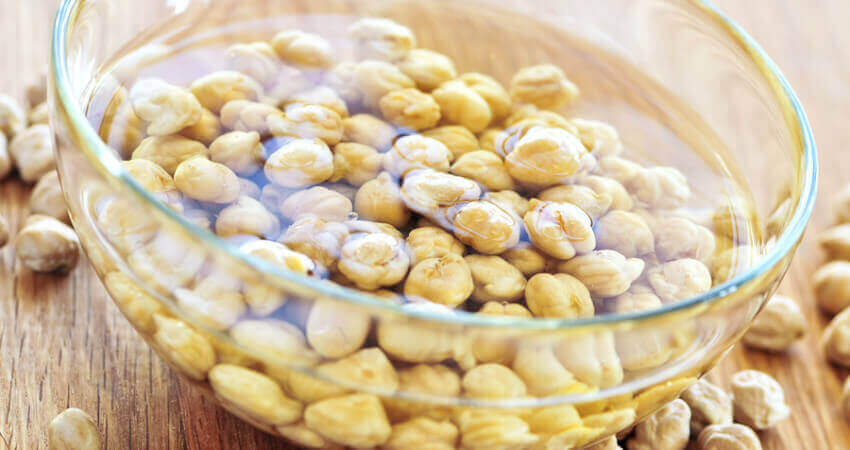
Aquafaba means “bean water,” and if you want to add a subtle egg substitute with the perfect consistency to your next baking experiment, just open a can of chickpeas. The water you’ll find in that can, the “bean water,” is aquafaba ready to use. If your recipe calls for a whipped, peaked consistency, just whisk your aquafaba in a bowl until it thickens. And if you’d rather make it completely from scratch, just cook chickpeas in a pot of water and save the water—that is, the aquafaba.
When the news started to spread that aquafaba could serve as a substitute for eggs, there were a few groups that were especially thrilled. First and foremost, the vegan community. As people who choose not to eat any animal products (including eggs and dairy), this was the first time they’d come across an affordable way to bake old egg-based favorites like meringues. Of course, people with egg allergies also had reason to celebrate, and anyone could see the satisfaction in getting good (free!) use out of something we usually throw away.
As for the rest of us, we don’t have to be vegan or allergic to eggs to see the benefit in getting some added nutrition. Every time you open a can of chickpeas to get some aquafaba, it’ll prompt you to add the chickpeas to your next nutritious meal or recipe, and even to use them in usually egg-inclusive favorites such as omelettes and cookies.
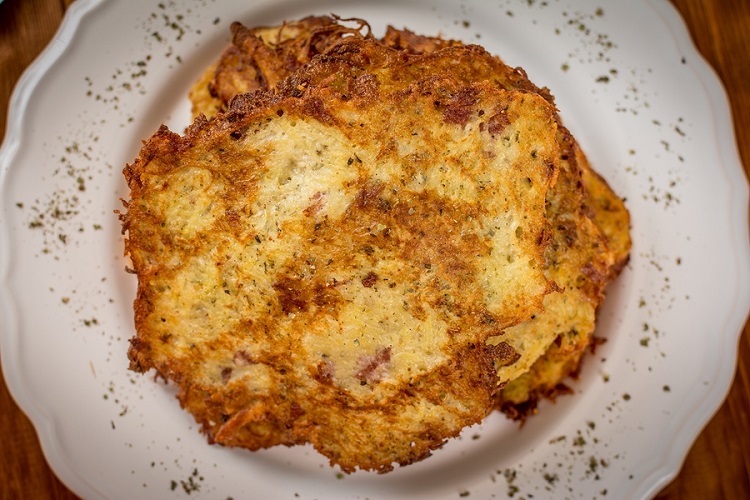
CHICKPEA HASHLETTES
An easy cholesterol-free breakfast dish
Ingredients
- ¾ cup / 164 g chickpeas, cooked or canned/drained, mashed
- ½ cup / 75 g potato, shredded
- 1 small yellow onion, pureed
- ½ Tbsp. / 2 g fresh oregano, chopped or:
- 1 tsp. / 1 g dried
- 1 Tbsp. / 3 g chives, chopped
- 1 clove garlic, minced or:
- ½ tsp granulated/powder
- ¼ tsp / 1½ g ground black pepper
- 1 Tbsp. / 15 ml olive oil
Instructions
- Combine first 7 ingredients.
- Brush ½ of the oil in an 8-inch / 20-cm lidded non-stick skillet. Warm over medium-high heat.
- Form two patties from the chickpea mixture, add to the pan, and cover. Lower heat to medium, and cook for 5 minutes.
- Lift the hashlette patties with a large spatula, brush remaining oil over bottom of pan, and return hashlettes to the pan to cook the other side. Cover pan, and cook for an additional 5 minutes, until cooked through and golden brown.
Can be frozen.
Exchanges per Serving: 1 Carb, 1 Protein, 1 Fat
Preparation Time: 10 minutes
Cooking Time: 10 minutes
Difficulty Rating: 1
Health Level: 5
Serving Size: 1 hashlette
Serves: 2
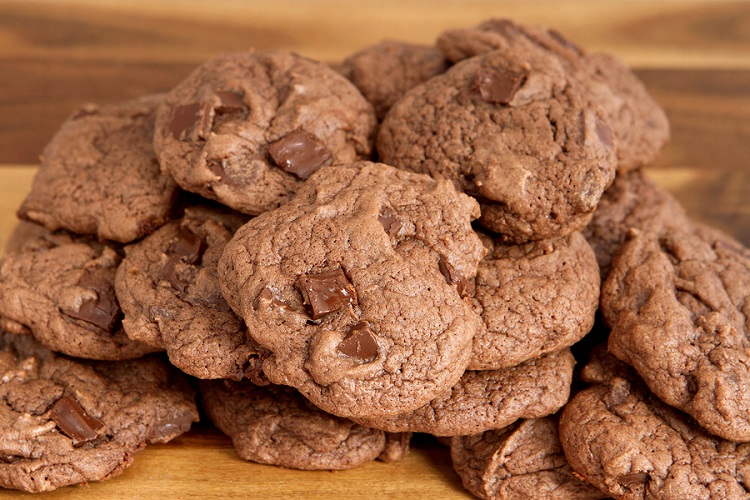
CHICKPEA CHOCOLATE CHOCOLATE-CHUNK COOKIES
A decadently healthy mouthful for your sensible sweet tooth!
Ingredients
- 1½ cups / 240 g chickpeas, cooked or canned and drained* (preferably low-sodium)
- 1 cup / 120 g shelled nuts of choice
- ¼ cup / 60 ml pure maple syrup or coconut blossom nectar
- 2 Tbsp / 30 ml molasses
- 1 tsp / 5 ml vanilla extract
- ½ tsp / 2 g baking powder (preferably aluminum-free)
- ½ tsp / 2 g baking soda
- ¼ cup / 22 g pure cocoa/cacao powder
- 3 oz / 85 g dark chocolate, preferably over 65% cacao, coarsely chopped
- 1 tsp / 5 ml nut or olive oil
* Save liquid for other recipes!
Instructions
- Turn on broiler/grill in oven.
- Spread nuts over baking sheet and place in oven until warm and slightly fragrant.
- Place nuts in a food processor or food chopper with an S-blade, and puree until smooth and buttery, about 20 minutes.
- Add nut butter to large bowl.
- Place chickpeas in food processor or chopper, and purée until well-mashed, gradually adding liquid sweetener.
- Add sweetened chickpea mash to nut butter, along with nearly all remaining ingredients, save for the oil, stirring well to combine.
- Change oven heat to 350°F / 180°C. Brush or mist the cookie sheet with olive or nut oil.
- Use a tablespoon and scoop dough into balls and drop onto cookie sheet evenly spaced.
- Bake for 20-25 minutes.
Exchanges per Serving: 1 Sweet
Preparation Time: 10 minutes
Cooking/Baking Time: 30 minutes
Difficulty Rating: 1
Health Level: 4
Serving Size: 2 cookies
Serves: 2
How Healthy is Aquafaba?
Let’s start with the source…
It’s no secret that the chickpea is one of the healthiest foods known to the modern world. Even though some people are nervous about its starch content and the potential impact on blood sugar and related metabolic health, the truth appears to be quite the opposite.
Clinical studies have consistently shown improvements in glucose and insulin levels in people adding chickpeas or chickpea flour to their regular daily diets. In a more recent clinical study, chickpea intake averaging as little as ⅔ cup (100 g) per day was associated with significant decreases in blood cholesterol and insulin levels, as well as a marker of insulin resistance.
A recent meta-analysis covering 21 clinical studies and nearly 1000 people showed an overall significant weight reduction advantage when eating about about ¾ cup (132 grams or 4½ ounces) of legumes/pulses, particularly chickpeas, every day. This was regardless of caloric restriction. In addition to just weight loss, some people even experienced loss of body fat, which is an even more important fitness outcome.
…and save the rest
When you know how much nutrition is found in aquafaba, you will be even more amazed that it has been discarded for so long—defying even the most basic logic. It is well-known that water-soluble vitamins and minerals are lost in cooking water, so it is no surprise that the chickpea version is an impressive source of rescued nutrients.
While aquafaba yields only ⅛ the energy of chickpeas and a trace of the carbohydrates (which includes soluble fibers), it yields about ¼ the protein, with the same distribution of essential amino acids, and fat, with minimal saturated fat and nearly ⅔ the beneficial omega-3 and omega-9 unsaturated fatty acids of chickpeas. B-vitamin levels in aquafaba range from ⅔ the amount in chickpeas to two-fold to five-fold! Water-soluble essential minerals range from just over ⅓ the amount in chickpeas to ⅔ to slightly more. Other essential nutrients reach ⅓. And because it’s a plant-based food, it goes without saying that it is free of cholesterol, unlike eggs, which have earned an unjustified but terrible reputation over the years due to the high amounts of cholesterol they contain.
And what about the “non”-essential phytonutrients associated with unique health-supporting properties of chickpeas? Saponins, pectins, and antioxidant compounds found in the bean husk are leeched in cooking water—meaning that a notable proportion may be reclaimed in aquafaba. Saponins and pectins are believed to be the very compounds associated with the foaming and gelling that contribute to meringues, fondants, and other delights that would otherwise require egg, and have been linked to improved cardiovascular markers. Some of the sugars and soluble fibers have been suggested not only to improve digestive function, but also to normalize metabolic health by supporting the increasingly acknowledged “satellite” immune and hormone systems in the intestines.
Just as importantly, the cooking process inherent in aquafaba production neutralizes “anti-nutritional” factors in chickpeas, which otherwise would bind nutrients, create digestive discomfort, and possibly even interfere with hormonal function in some people.
Is Aquafaba Right for Me?
As we’ve seen above, starting to use aquafaba in our cooking and baking would be a step in the right direction for any health-conscious and frugal cook.
While the most obvious groups to benefit from this new egg substitute are the vegan community and those with egg allergies, it would be a shame for the nutritional value of aquafaba to be limited to those who will not or cannot eat eggs.
Chickpeas and their cooking liquid yield antioxidant phytochemicals, as well as vitamins and essential minerals, amino acids, and fatty acids. These components have been shown to support healthy digestion and metabolic function, including with regard to blood glucose and lipids. Even if you continue to eat eggs, there’s a strong case for supplementing your cuisine with aquafaba. In addition to improved general health, aquafaba may give you the gentle push you need to find a mouth-watering recipe that gets drained chickpeas in your next nutritious meal.
Below are a couple more aquafaba recipes to get you started:
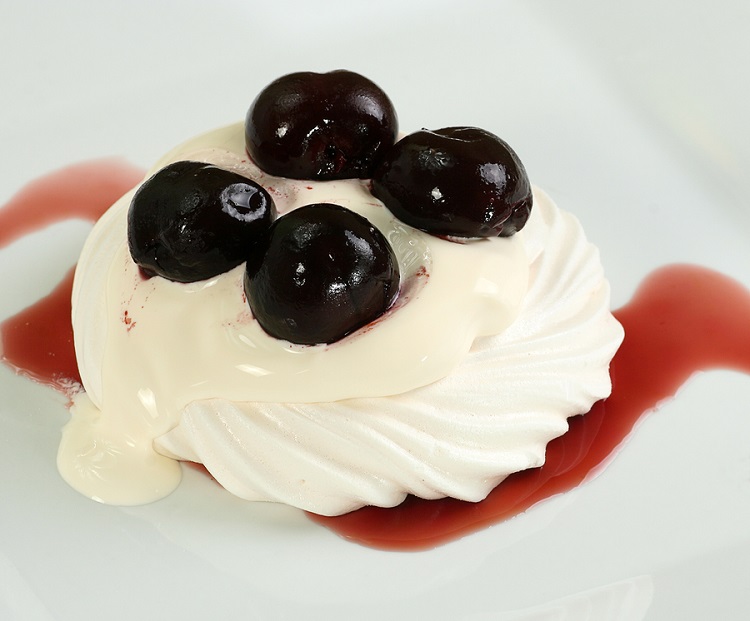
PETITE PAVLOVA PUFFS WITH BERRIES & “CRÈME”
A dairy-free, vegan-friendly version of the classic ballerina-inspired dessert delicacy.
Ingredients
- 1 cup powdered whole sugar
- 1 cup / 240 ml aquafaba (liquid from 1 15-oz / 425-g can of low-sodium chickpeas)
- ½ tsp. / 2½ ml vinegar or 1½ g cream of tartar
- 2 tsp. / 10 g real vanilla, extract or powdered beans
- Dairy-Free Whipped Cream
- 1 cup / 160 g berries of any type
Instructions
- Preheat oven to 200°F / 100°C. Line a baking sheet with parchment paper.
- In a large bowl, beat the chickpea brine until soft peaks form, at least 5 minutes, depending on the strength of your mixer.
- Add vinegar or cream of tartar, followed by a steady stream of sugar, then vanilla, beating continuously. Beat until stiff peaks form, for at least 5 additional minutes.
- Pipe or spoon ⅓ cup / 80 ml of the meringue batter onto the parchment paper. Create a 2-in / 5-cm round indentation in the center of every meringue.
- Bake the meringues for 2 hours in the oven (do not open the oven door during the first hour).
- After 2 hours, turn off the oven and let the meringues cool inside for 30 minutes. Check for doneness by tapping on the meringue and listening for a hollow sound.
- Meanwhile, prepare the Dairy-Free Whipped Cream, if you haven’t already done so.
- Remove the meringues from the parchment paper and set onto a serving dish.
- Spoon 1 tablespoon / 15 ml of the cream into every indentation. Top with 1 tablespoon / 10 g berries.
Exchanges per Serving: 1 Sweet
Preparation Time: 20 minutes
Baking Time: 2 hours
Difficulty Rating: 2
Health Level: 4
Serving Size: 1 4-inch / 10-cm puff
Serves: 10
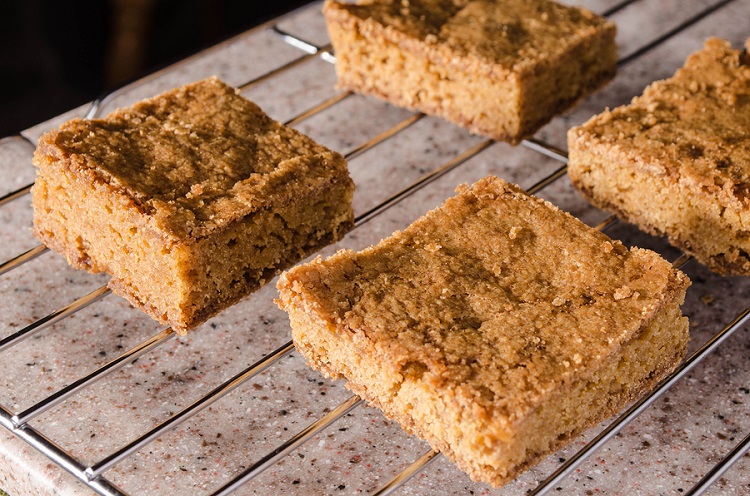
CINNA–BLONDES
These cinnamon blondies are tender and moist in the center with a bit of a crackle on top. High in beneficial cinnamon “phytonutrients” that support blood sugar balance and healthy weight management, these treats are healthier than average dessert bar, and SO addictive.
Ingredients
- 1 15-oz / 425-g can of low-sodium chickpeas, or 1½ cups / 240 g cooked chickpeas (from ⅔ cup / 120 g dry), drained (save the liquid for another use!)
- ¼ cup / 30 g old-fashioned (steel-cut or rolled) oats, gluten-free if needed
- 1½ cups / 170 g nuts
- ⅞ cup / 170 g coconut sugar
- 1½ Tbsp / 13½ g ground cinnamon
- 1 tsp / 5 ml pure vanilla extract
- ¼ tsp / 1¼ g baking soda
- ½ tsp / 2½ g baking powder, preferably aluminum-free
- ¼ tsp / 1½ g salt or substitute
- Extra cinnamon (optional for garnish)
Instructions
- Preheat oven to 350°F / 180°F. Line an 8-inch / 20-cm baking dish with parchment paper.
- Grind nuts on high speed until they attain a smooth nut-butter texture, about 2 minutes. This will make about ½ cup.
- Combine drained chickpeas, nut butter, and remaining ingredients in a food processor or mixing bowl, and purée until smooth.
- Spread batter evenly in prepared baking dish.
- Bake for 30 minutes until the top is firm and the sides start to separate from the baking dish.
Sprinkle cinnamon on top (if desired) before cutting and serving.
Exchanges per Serving: 1 Sweet
Preparation time: 10 minutes (+ 1½-4 hours if cooking soaked or unsoaked chickpeas)
Cooking time: 30 minutes
Difficulty Rating: 2
Health Level: 4
Serving Size: 2-inch / 5-cm square
Serves: 16
Yes, you should eat chickpeas – but never these!
Sources
- Aquafaba Admin. The Official Aquafaba Website 2016 Feb 01. Reviewed 2016 Mar 21.
- El-Adawy TA. Nutritional compositions and antinutritional factors of chickpea (Cicer arietinum L.) undergo different cooking methods and germination. Plant Foods Hum Nutr. 2002;57:83-97.
- Johnson SK, Thomas SJ, Hall RS. Palatability and glucose, insulin and satiety responses of chickpea flour and extruded chickpea flour bread eaten as part of a breakfast. Eur J Clin Nutr. 2005 Feb;59(2):169-76.
- Jukanti AK, Gaur PM, Gowda CL, Chibbar RN. Nutritional quality and health benefits of chickpea (Cicer arietinum L.): a review.. Br J Nutr. 2012 Aug;108 Suppl 1:S11-26.
- Kim SJ, et al. Effects of dietary pulse consumption on body weight: a systematic review and meta-analysis of randomized controlled trials. Am J Clin Nutr. 2016 Mar 30.
- Nestel P, Cehun M, Chronopoulos A. Effects of long-term consumption and single meals of chickpeas on plasma glucose, insulin, and triacylglycerol concentrations. Am J Clin Nutr. 2004 Mar;79(3):390-5.
- Pittaway JK, Robertson IK, Ball MJ. Chickpeas may influence fatty acid and fiber intake in an ad libitum diet, leading to small improvements in serum lipid profile and glycemic control. J Am Diet Assoc. 2008 Jun;108(6):1009-13.
- Sidhua GS, Oakenfull DG. A mechanism for the hypocholesterolaemic activity of saponins. Br J Nutr. 1986;55:643-649
- United States Department of Agriculture (USDA) Agricultural Research Service. Chickpea. In Legumes and Legume Products. National Nutrient Database for Standard Reference Release 28. Software v.2.3.8. The National Agricultural Library. Retrieved 2016 Mar 21.
- Urias-Orona V, Huerta-Oros J, Carvajal-Millán E, Lizardi-Mendoza J, Rascón-Chu A, Gardea AA. Component analysis and free radicals scavenging activity of Cicer arietinum L. husk pectin. Molecules. 2010 Oct 11;15(10):6948-55.
- Xu B, Chang SKC. Phytochemical Profiles and Health-Promoting Effects of Cool-Season Food Legumes As Influenced by Thermal Processing. J Agric Food Chem. 2015;76(1):142-49.
Can you drink the Aquafina of canned chickpeas?
Hi, Maurine1. Yes, of course. Note though that if it comes from a can, there is a chance that it is high in salt (sodium).
I have listened to the audio video and I have only heard 3 things onto eat ..orange juice , whole meal. Bread and margarine .. What are the other two please ?
Hi, Diana. The video discussed artificial or overprocessed versions of popular foods that should be healthy, but have been manipulated into being particularly harmful to your goals. Rather than giving up on them altogether, we encourage better versions in their original, natural forms. Note that the foods discussed in the video are only examples, and many other popular foods have been similarly affected—so it’s good to read labels, be aware of how a food is made, and choose whole foods as much as possible.
1. Regular “whole wheat” bread—this often also contains refined flours, so it is preferred to select “100% whole” grain products (wheat or other). Even with these products, be sure to read the label and avoid hydrogenated fats or similar ingredients such as mono- and diglycerides.
2. Regular margarine—this is often made from chemically altered fats that create health risks similar to those people are trying to avoid by eating a plant-based product. If you must use a hardened oil, t is better to choose those based on coconut oil, and otherwise to use healthy liquid oils, such as olive, as much as possible.
3. Artificial sweeteners—you can read more about this here: https://www.trimdownclub.com/the-best-way-to-sweeten-your-tea-2.
4. Regular orange juice—If it is in a store, it is likely to have been stripped of what makes it healthy. Even if vitamins etc. have been added back in, it really is not the same. Fresh-squeezed is the way to go.
5. Conventional and overly processed soy—organic is fine, and minimally processed items such as tofu, yogurt, and milk, as well as fermented items such as tempeh and natto are fine. However, most pre-packaged mock meats tend to be a problem.
Just getting organized and wonder what I will be able to exchange for nuts? I am thinking the nuts are used for protein? M
Hi, Luv2laugh. Yes, nuts are used for protein, as well as for healthy fats. Substitutes would include seeds, cheeses, and combinations of other proteins plus fats, e.g. egg and avocado.
Hi there seems to be reference to a lot of ? American ingredients is there anywhere that you first uk alternatives?
The foods in our lists are actually collected from around the world (and available in the UK), but lesser known to many. They were selected because they are less mass-produced and therefore relatively unmanipulated and more nutritious and supportive of health and healthy weight management. I encourage you to take advantage of our shopping guide https://www.trimdownclub.com/where-to-buy-UK; one of the sites, http://www.goodnessdirect.co.uk, offers nice explanations of their foods. Regular supermarkets such as Tesco, Asda, and Waitrose are increasingly carrying these items as health-conscious consumers are increasingly requesting them; Holland and Barrett carries even more, of course, and Whole Foods Market even more.
I will be cooking chick peas tomorrow. Do I rinse them with water after soaking overnight? Im impressed with the info u have given.Thank u.
Hi, Smw1899. Thanks! It is generally recommended to rinse after soaking.
I cook something similar to chickpea hashlets, it is called falafel. I also use some of the chickpeas water when crushing the chickpeas for a dish I make humour. However, I did not know the benefits of Aquafaba, now I know I will try some of these recipes, thanks to the trim down club.
I love chickpeas. Have eaten them since I was a child. My grandmother used to cook chickpeas with pieces of pork in a light red sauce that was made with tomato sauce, chopped onions, bell peppers, cilantro, garlic, oregano, olives and cappers. We would eat it over rice. Yummy.
rresther
Very interesting about choke peas I will try the cakes
I am not sure how to get started. Granulated flour, is that regular flour?
I would like to lose fifteen pounds and most important KEEP it off.
Thank you for your help……Have a good day..:)
Hi, birdwell, and welcome! We hope you reach your goal, and are happy to help in whatever way we can.. Granulated flour “ultrafine”ly ground, and is generally used for thickeners rather than baking, though it can be used in baking. Either way, we encourage you to choose whole grain 🙂
I shall definately try the Chickpea Hashlets. I have only ever used (canned) chickpeas in the odd casserole-type dish before, always throwing the water away, but I like the sound of chickpeas being the star of the meal! Melinda x
I will try my hand at these
I am a diabetic, and am confused about how many carbs,fats, sugar and fiber I should have per meal. I have not had a diabetic training class. I want to get my blood sugar in the 100-110 range and I want to lose weight.
Hi, getslimnow. In the toolbar above your menu, click on “Exchange mode” to see the exchanges allotted to you for each meal and over the whole day (total at the bottom).
The following are the general nutritional values of the exchanges:
1 carb exchange = 15 grams of carbohydrates + up to 3 grams of protein
1 protein exchange = 7 grams of protein + up to 5 grams of fat
1 fat exchange = 5 grams of fat
1 fruit exchange = 15 grams of carbohydrates
1 vegetable exchange = 5 grams of carbohydrates + up to 2 grams of protein
1 sweet exchange = up to 15 grams of carbohydrates + up to 5 grams of fat
1 free exchange = up to 5 grams of carbohydrates or up to 2 grams of protein or fat
I would encourage you to get some diabetic training, even if it is just a single appointment with someone through your HMO.
Thank you for posting this- I was looking for the references for diabetics. I’ll click on the exchange button as well.
Hi, terramill. You (and getslimnow) may also find our food exchange list helpful – https://www.trimdownclub.com/exchanges-lists.